

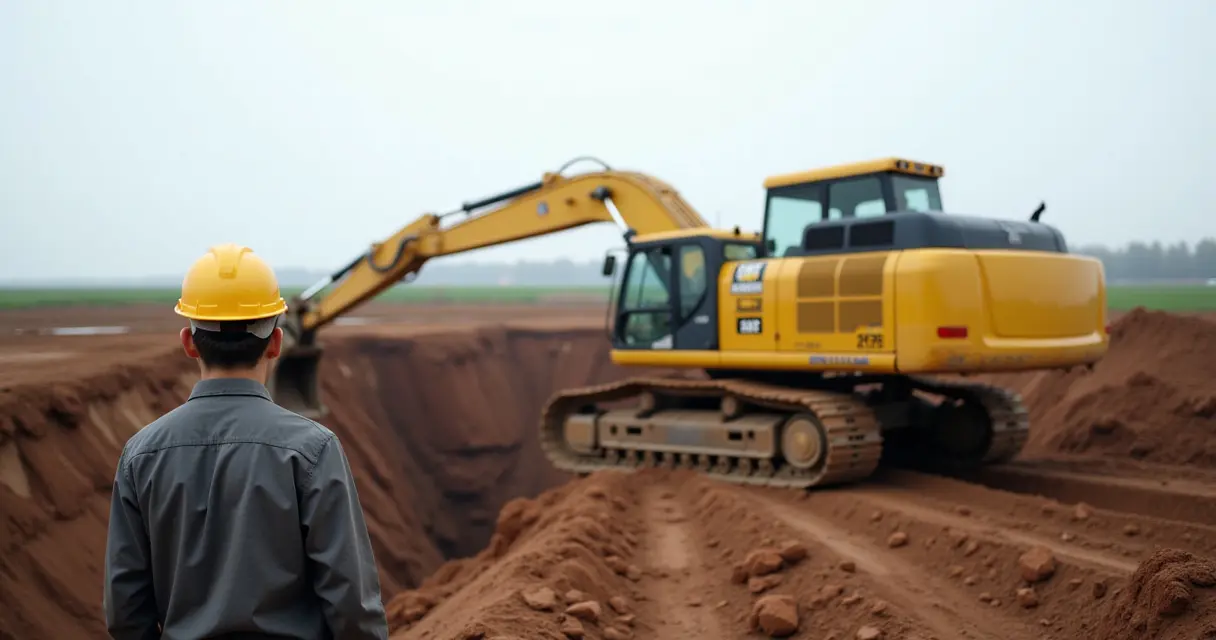
Excavators are a fixture on construction sites everywhere, and the people who run them well remain in demand. Here is the good part: you can begin excavator operator training online, for free, without spending a dollar on a course or a school first.
Money was the old roadblock. Formal excavator training meant paying a private school up front, before a single paycheck as an operator ever arrived.
Things are different now. You can use a free online course to learn the safety and the theory first, and then carry that head start into real, hands-on excavator training.
Advertisement
We want to be clear about what a free course delivers. It offers real foundations and a certificate of completion, while the hands-on hours and OSHA safety that a paid job requires are a separate matter.
Get started with a free excavator course
Why excavator operator training is a smart move
The paycheck is reason enough to get going. Excavator work belongs to the construction equipment operator category, where the median wage was 58,320 dollars per year in May 2024, according to the U.S. Bureau of Labor Statistics.
Demand here is steady and lasting. The BLS projects construction equipment operator employment to grow about 4 percent through 2034, and retiring workers keep opening seats for new operators year after year.
You will not need a degree, either. Most operators get started with a high school diploma, then build their career through training, an apprenticeship, or time on the job.



Where excavator operators work and which jobs pay most
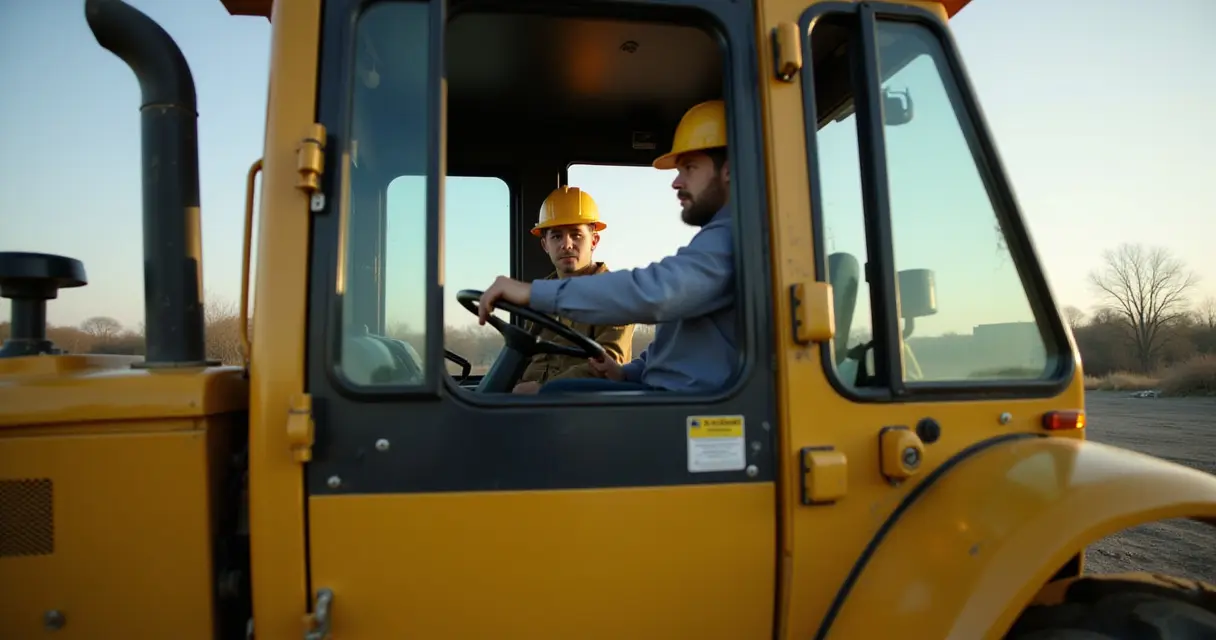
Excavator operators find work in building construction, road and bridge jobs, utilities, pipelines, and demolition. With so many places to work, the career holds steady across the years.
Pay grows as skill and setting improve. Heavy construction, pipeline, and specialty work often outpay general site work, and an operator who adds machines brings home more over a career.
Union jobs and prevailing wage jobs bump pay higher as well. It is one reason the apprenticeship route, which you will read about below, stands out as such a strong path for a new excavator operator.
Advertisement
What an excavator does on site
Excavators are used to dig trenches, foundations, and holes, and to lift and move heavy material. In construction and earthmoving, they are among the handiest machines around.
Getting comfortable with the controls, the swing, and the reach demands real practice. Skilled operators also read the ground, handle their loads with care, and keep nearby workers safe.
Training exists for exactly that judgment. With all the power an excavator has, a trained operator is the one who heads off the accidents and damage that cost a job time and money.
Types of excavators you might operate
You will see excavators in several sizes, each designed for a different kind of job. Knowing the sizes helps you pick the training and the work that suit your goals.
Compact and mini excavators
Mini excavators work well on tight sites, in landscaping, and on utility jobs. They make a friendly starting point where a new operator can build skill and confidence.
Standard crawler excavators
Most of the digging and trenching on construction sites is done by standard excavators. Most training and most jobs center on this size of machine.
Large and long-reach excavators
Big and long-reach excavators are used for heavy earthmoving, demolition, and specialty jobs. They generally reward operators who already have solid hours and a strong safety record.
What excavator certification actually requires
The "get certified online" ads conveniently leave this out. Excavators have no single national certification the way cranes do, but that still does not mean a free course is enough.
The thing employers really want is proof that you can operate the machine safely. It comes from supervised seat time, not a video, plus the OSHA safety knowledge expected on every jobsite.
Many operators must also hold a commercial driver license, or CDL, just to move the excavator between jobsites. The CDL is a paid, state-issued license, which puts it out of reach for any free course.
What "free" really covers, and what it does not
Free gets you the knowledge. Learning machine parts, safety rules, and load basics costs nothing, and finishing the course earns you a certificate that shows initiative.
Free does not get you seat time on a real machine, nor a CDL if your role needs one. Those are separate steps, and an honest plan accounts for them right from the start.
How online excavator training works, and where it stops
When it comes to the parts that live in your head, online training is genuinely useful. Machine components, safety rules, and load basics can all be learned before you ever climb in.
Seat time is where it stops. An app has no way to teach your hands the feel of the boom, the bucket, and the swing on uneven ground.
So look at the free course as step one of your training. It sends you into hands-on practice already knowing the language and the safety rules.
What you need to learn
- Excavator parts and controls, and what each one is for
- Core safety rules and OSHA-aligned practices
- Daily inspection and basic maintenance checks
- Digging, lifting, and load handling basics
- Reading the ground and staying safe around people
- How certification and licensing steps fit together
Safety practices every excavator operator should know
Employers value safety more than anything else on the job, and that is where a free course pays off early. Good habits protect you, your crew, and the machine.
- Inspect the machine before every shift and report any problem
- Wear the right protective gear and leave it on all day
- Know your blind spots and use a spotter when needed
- Call to locate underground utilities before digging
- Never swing a load over people, and stay clear of trench edges
When you know these rules before your first day of hands-on training, you are safer and easier to hire. It gives you one more reason to finish the free foundations.
Best free and low cost resources
You can trust these as starting points for excavator training. The ones most likely to lead to a real job are in person and funded, not a quick online badge.
- Alison: free online courses in equipment and construction topics, with a completion certificate.
- OSHAcademy: free safety training aligned to OSHA topics and useful on every site.
- CareerOneStop: find WIOA funded hands-on training near where you live.
- IUOE apprenticeship: paid training with real hours through the operating engineers union.
Is excavator training really free? The honest cost breakdown
The online course is free of charge. The steps after it might not be, so this breakdown points out where costs can arise on the way to a paid excavator job.
| Step | Typical cost |
|---|---|
| Online foundations and safety course | Free |
| Hands-on training at a private school | Paid, unless funded by WIOA or an employer |
| CDL to haul the machine, if required | Paid, state-issued |
| Apprenticeship route | You earn while you train |
How long it takes to become an excavator operator
Going at your own pace, you can finish the free online foundations in days or a few weeks. That stretch depends entirely on how fast you move through the course.
Hands-on training extends the clock. A short private program can take a few weeks, and an apprenticeship builds your skill over a few years with a paycheck along the way.
The message is simple. Free learning can start today, but getting job ready is a path you walk, not a single afternoon's work.
The smartest free path: apprenticeship
When the goal is real training with no debt, an apprenticeship is your strongest move. Programs from the operating engineers union join classroom learning with paid seat time.
A wage comes in during your training, and you finish holding real hours that employers respect. For those who qualify, government workforce programs such as WIOA can fund training as well.
Make the free online course your preparation for the entry test and interview. Showing up already knowing the basics makes you a stronger candidate.
Can an online course replace in person training?
The answer is no, and a site telling you otherwise is selling you something. Classroom learning can happen online, but machine learning cannot. You need real hours on a real excavator.
Will employers accept your certificate?
Used as a signal, yes. A completion certificate shows initiative and that you understand excavator operation basics before day one.
Used as a substitute, no. It will not cover the hands-on hours, the OSHA safety card, or a CDL if your role requires one.
Red flags to watch out for
- Sites that promise a "license" or "certification in days" entirely online
- Courses that charge for an official license they cannot issue
- Pages that say nothing about hands-on training, OSHA, or a CDL
- Badges that read "certified" when they only mean "finished the video"
Expanding your skills to other machines
As soon as you are comfortable on an excavator, a second machine adds to your value and your pay. Many operators go on to bulldozers, dump trucks, or cranes.
Cranes pay among the best, even though they require NCCCO certification. Each machine you learn unlocks more of the construction job market.
Tips to start your excavator career strong
A few simple moves help your first months run smoother and make you stand out to employers looking for reliable operators.
- Finish the free course and hold on to your certificate to show initiative
- Ask about helper or ground roles to get near the machines
- Keep a clean record and a reliable schedule from day one
- Learn your local pay rates so you can negotiate fairly
- Say yes to safety training each time it is offered
Operators who take their early steps seriously move up faster. The free foundations are the easiest first win, so start there and keep building real hours.
Your next steps
Start free and follow the honest path from there. For the full picture across every machine, read our main guide to free heavy equipment training and see every free path in the high-paying jobs hub.
- Finish a free excavator or heavy equipment course to learn the basics
- Check your state rules and see whether you need a CDL
- Get hands-on training through a local program, WIOA, or an apprenticeship
- Apply, lead with the free certificate, and keep building real hours
Frequently asked questions
Where can I find a free excavator operator course?
Alison and sites like it offer free online courses that teach the foundations and come with a certificate of completion. Hands-on training on a real machine is handled as a separate step.
Does operating an excavator require a license?
No single national license applies, but employers want safe, proven skill and OSHA safety. You will often need a CDL to haul the machine between sites.
What is the pay for excavator operators?
According to the BLS, excavator work sits under construction equipment operators, who earned a median of 58,320 dollars per year in May 2024. Higher skill and better settings raise pay.
How long is excavator training?
Plan on days to weeks for the online foundations, at your own pace. Hands-on training adds weeks to a few years, depending on whether you choose a school or an apprenticeship.
Can excavator training be done for free?
The foundations can. Real hands-on training can be free too, through WIOA funding or a paid apprenticeship, provided you qualify.
Should a beginner pick an excavator or a dump truck?
Both are common entry points. A dump truck requires a CDL, while an excavator depends more on supervised seat time and OSHA safety.
Do I have to buy an excavator to train?
No. Schools and apprenticeships supply the machines, and the free online course just needs a phone or computer and an internet connection.
Is an online course alone enough to get hired?
It is a useful signal, but most employers want real seat time and the safety credentials for the role.