

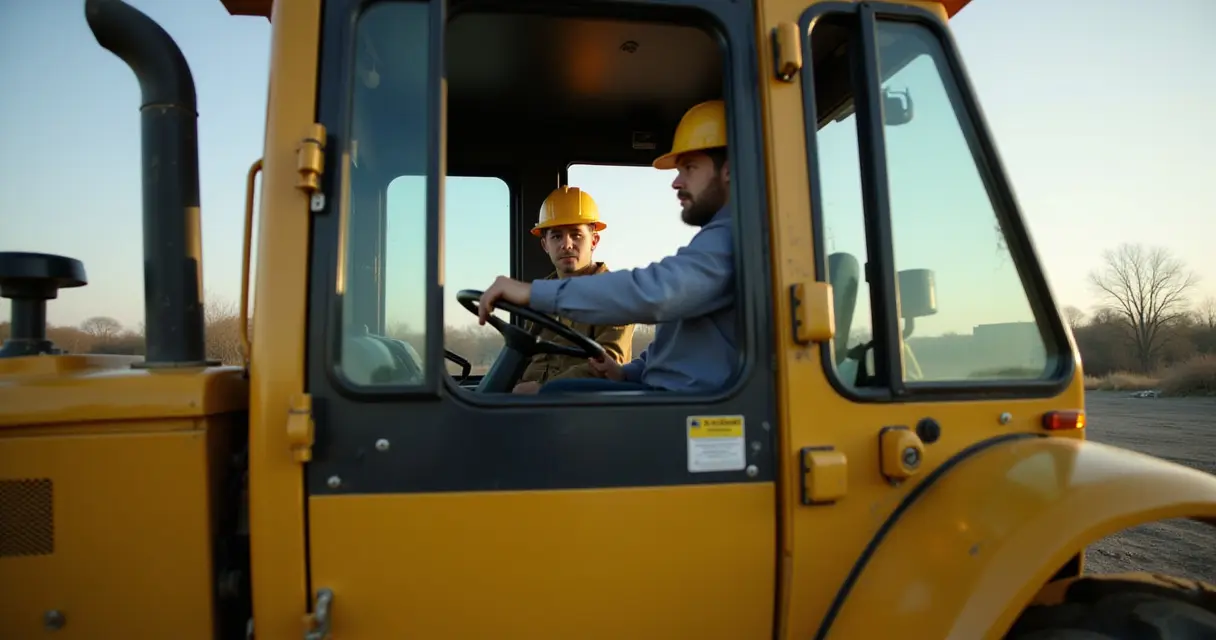
Construction sites from coast to coast need operators for the big machines. The job pays well, and heavy equipment operator training lets you get started with no college degree.
The real barrier used to be cost. Formal training could run into the thousands, and you paid it long before seeing a paycheck.
Things look different today. A free online course can give you the foundation, letting you learn safety and theory at your own pace.
Advertisement
Most sites leave one fact out, and we are putting it up front. When you finish a free course you get a certificate of completion, not the certification or license that actually puts you in the operator's seat.
Below is the real pay, what free heavy equipment training covers and where it stops, and the honest path from your first lesson to a paid career.
Begin with a free heavy equipment course
Why heavy equipment operator training is worth it
It starts with pay. Construction equipment operators made a median wage of 58,320 dollars per year in May 2024, based on U.S. Bureau of Labor Statistics data.
Certain jobs pay above that. Pile driver operators earned a median of 70,510 dollars, and building construction operators were at about 63,850 dollars.

The demand is lasting. The BLS projects employment growth of about 4 percent through 2034, and new seats open every year as operators retire.
Even better, the door is open without a degree. Most operators start out with a high school diploma and move up through on-the-job learning, an apprenticeship, or a vocational training program.
Types of heavy equipment you can train on
Each machine has a different job and a different learning curve. Choosing early gives your training and your job search a clear focus.
Advertisement
Excavators
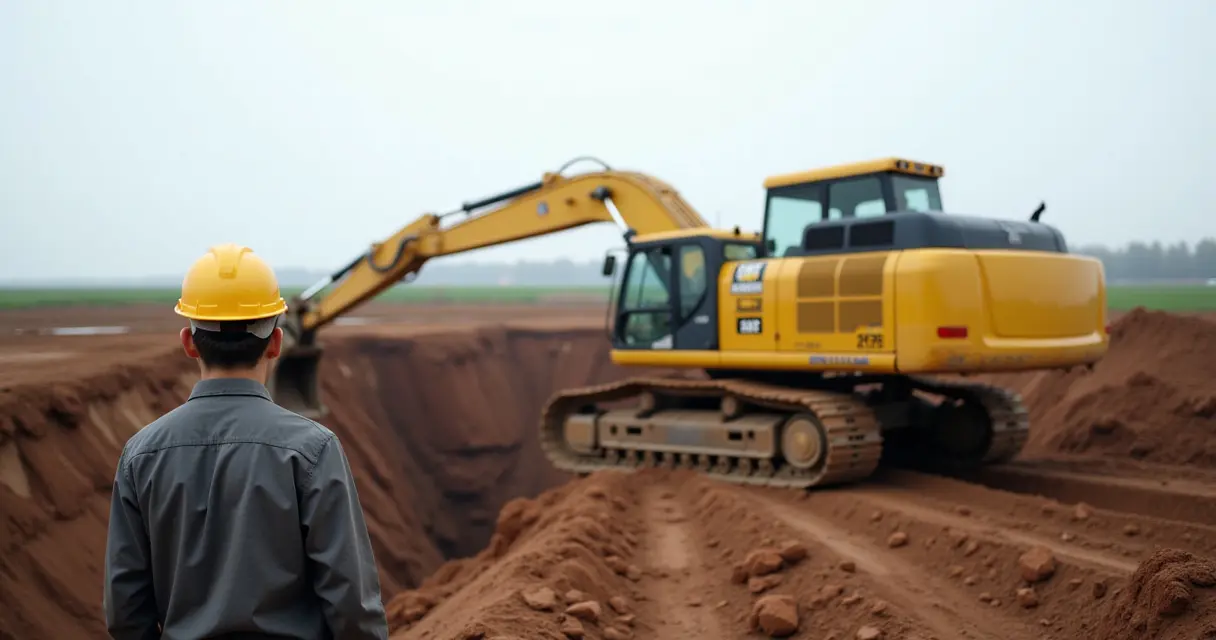
Digging, lifting, and moving earth on almost every site is the excavator's job. It is a typical entry machine, and skilled operators stay in high demand, as our excavator training guide explains.
Bulldozers
Bulldozers level and push material using a heavy front blade. A few states require a special license to operate one, so check your local rules before training, or read our bulldozer guide.
Dump trucks
The dump truck hauls material to and from the jobsite. This work almost always requires a commercial driver license, a paid credential the state issues, as our dump truck and CDL guide explains.
Cranes
Cranes carry heavy loads high above the site and are among the best paid machines in the field. They also demand the strictest certification, via NCCCO, as our crane operator guide shows.
What certification and licensing really require
Here is what the "get certified online" ads do not say. A completion certificate is proof that you studied. It is not the certification or license that allows you to operate for pay.
The specific requirement changes with the machine and the state. In a few states, operators of loaders and bulldozers need a special license.
Lots of operators need a commercial driver license, or CDL, just to transport the equipment between jobsites. The CDL is a state-issued license you pay for, and it does not come with a free course.
Cranes are tougher still. Becoming a certified crane operator means NCCCO certification, with fees and real practical testing.
Below, the table shows the honest gap between a free course and the certification each role needs on the job.
| Machine | Free course gives you | The job also needs |
|---|---|---|
| Excavator | Theory, safety, completion certificate | Hands-on hours, OSHA safety |
| Bulldozer | Theory, safety, completion certificate | Hands-on hours, a state license in some states |
| Dump truck | Theory, safety, completion certificate | A commercial driver license, or CDL |
| Crane | Theory, safety, completion certificate | NCCCO certification, paid and hands-on |
How online heavy equipment training works, and where it stops
Online training really helps with everything you learn by reading and thinking. Machine components, safety rules, load basics, and site awareness can all be covered before you climb aboard.
It stops at seat time. No app can give your hands the feel of the controls, or teach you how a loaded machine shifts on soft ground.
Consider the free course step one of your training. You begin hands-on practice already knowing the terms and the safety rules.
What a free heavy equipment course actually covers
- Machine types and what each is built to do
- Core safety rules and OSHA-aligned practices
- Basic inspection and daily maintenance checks
- Load handling concepts and jobsite awareness
- How certification and licensing steps fit together
Why online training is cheaper and more flexible
A free online course gets rid of the biggest hurdle: cost. You learn the foundations with no tuition, so you can be sure the field is for you before spending a dollar.
Flexibility is the other win. Study at night or on weekends, keep working your current job, and go at a speed that fits your life and your family.
That early start pays off down the road. When hands-on training arrives, you already know the safety rules, which makes your paid seat time go further.
Best free and low cost places to start training
Each option below is a legitimate way into heavy equipment training. You will notice the ones that lead to a real job are mostly in person and funded, not a quick online badge.
| Option | Cost | Format | Best for |
|---|---|---|---|
| Alison | Free | Online, self paced | Foundations and a completion certificate |
| OSHAcademy | Free to study | Online | Safety knowledge aligned to OSHA topics |
| CareerOneStop and WIOA | Free if eligible | Local, in person | Government funded real training near you |
| IUOE apprenticeship | Paid, you earn | In person | The real path, get paid while you learn |
Alison
Free online courses on construction and equipment topics are available on Alison, each finishing with a certificate of completion. It is the best place to study the theory and show you did the work.
OSHAcademy
At OSHAcademy you get free safety training aligned to OSHA topics. Safety knowledge is mandatory on every jobsite, so it is a smart free complement to your machine training.
CareerOneStop and WIOA
CareerOneStop, with backing from the Department of Labor, connects you with local training funded by WIOA. When you qualify, these programs can pay for real, hands-on training nearby.
IUOE apprenticeship
Apprenticeships run by the International Union of Operating Engineers pay you through your training. You finish with real hours and a credential employers respect across the country.
Community and technical colleges
Your local community and technical colleges offer heavy equipment operator programs with real machines. Costs are often lower than at private schools, and some students qualify for grants.
How to enroll in a free online course
- Visit a trusted training site like Alison and sign up for a free account
- Search for heavy equipment, construction, or your machine of choice
- Check that the topics match what you need to learn
- Complete the lessons on your own schedule and pass the checks
- Download your certificate of completion to show initiative
The smartest free path: apprenticeship
Want real training and no debt? An apprenticeship is the strongest choice. Union programs for operating engineers mix classroom learning with paid seat time.
You earn while you learn and finish with real hours that employers trust. If you qualify, government workforce programs such as WIOA can also fund your training.
Prepare for the entry test and the interview with the free online course. Having the basics down before you arrive makes you a stronger candidate.
Expanding your skills to other machines
After you master your first machine, learning a second boosts your value and your pay. Employers value operators who can move from an excavator to a bulldozer to a dump truck.
Cranes are a good next step for higher pay, though NCCCO certification is required. Each new machine you learn opens another part of the construction job market.
Can an online course replace in person training?
No, and any site that says it can wants to sell you something. The classroom portion works online; the machine portion does not.
Will employers accept a free certificate?
As a signal, yes. A completion certificate shows initiative and that you understand the basics before your first day.
As a substitute, no. It does not replace the hands-on hours, the OSHA safety card, or the CDL and state licenses your role might require.
Red flags to watch out for
- Sites that promise a "license" or "certification in days" completely online
- Any course that charges you for an official government license it cannot issue
- Pages that never talk about hands-on training, OSHA, or a CDL
- Badges that read "certified" but only mean "finished the video"
Your next steps, the honest path
Start free, then stick to the honest path. For more trades and options, look at the high-paying jobs hub and the excavator training guide.
- Start a free foundational course to learn theory and safety
- Check the rules in your state for the machine you want to run
- Get hands-on training from a local program, WIOA, or an apprenticeship
- Earn any required license, like a CDL, before you need it on the job
- Apply with the free certificate in front and keep building real hours
Frequently asked questions
Is a free online course in heavy equipment legit?
Yes, for what it offers. It covers real foundations and ends with a completion certificate, but by itself it does not license you to operate for pay.
How much can a heavy equipment operator make?
The BLS reported that construction equipment operators earned a median of 58,320 dollars per year in May 2024. Some specialties, pile driver operators among them, pay more.
Do heavy equipment operators need a CDL?
Often, yes, for hauling the equipment between jobsites. The CDL is a paid, state-issued license, and each state sets its own rules.
How long does it take to train as a heavy equipment operator?
At your own pace, the online foundations take days or weeks. Hands-on training and any license add more time, depending on the state and the program.
Can I train for free and pay nothing?
Sometimes. Government programs like WIOA and union apprenticeships can cover real training, and an apprenticeship pays you while you learn if you qualify.
What is the best machine to learn first?
Decide by local demand and pay. Excavators and dump trucks are typical entry points, while cranes pay more but require stricter certification.
Is an online certificate the same as being certified?
No. An online course gives you a certificate of completion. Real certification, like NCCCO for cranes, requires testing, hands-on skill, and often a fee.
Will an online certificate alone get me hired?
It helps as a signal, but most employers want hands-on hours plus the safety and license credentials the role requires.