

Type free plumbing course with certificate into Google and you will see page after page promising a fast track into a six figure trade. Some of that is honest. A lot of it is not.
What you need is the truth, not the sales pitch. A free online course can really teach you the fundamentals, and the completion certificate it gives you is a real document.
Still, that piece of paper cannot make you a licensed plumber, and in most of the United States it does not let you legally work on anyone's pipes for pay.
Advertisement
Try a real plumbing fundamentals course
Free introduction with a completion certificate, no payment and no obligation.
As a regulated trade, plumbing has one credential that truly opens the door: the apprenticeship. And the best part is that you are paid for every hour of it.
Think of the free course, then, as a first step with zero risk. It reveals whether this kind of work appeals to you before you spend years on it.
Why does that matter? Plumbing is hard, precise, physical work, and testing it with a few free hours of fundamentals is the cheapest way to find out if it is for you.
This guide sorts the real from the marketing and walks through the exact path from curious beginner to licensed professional.
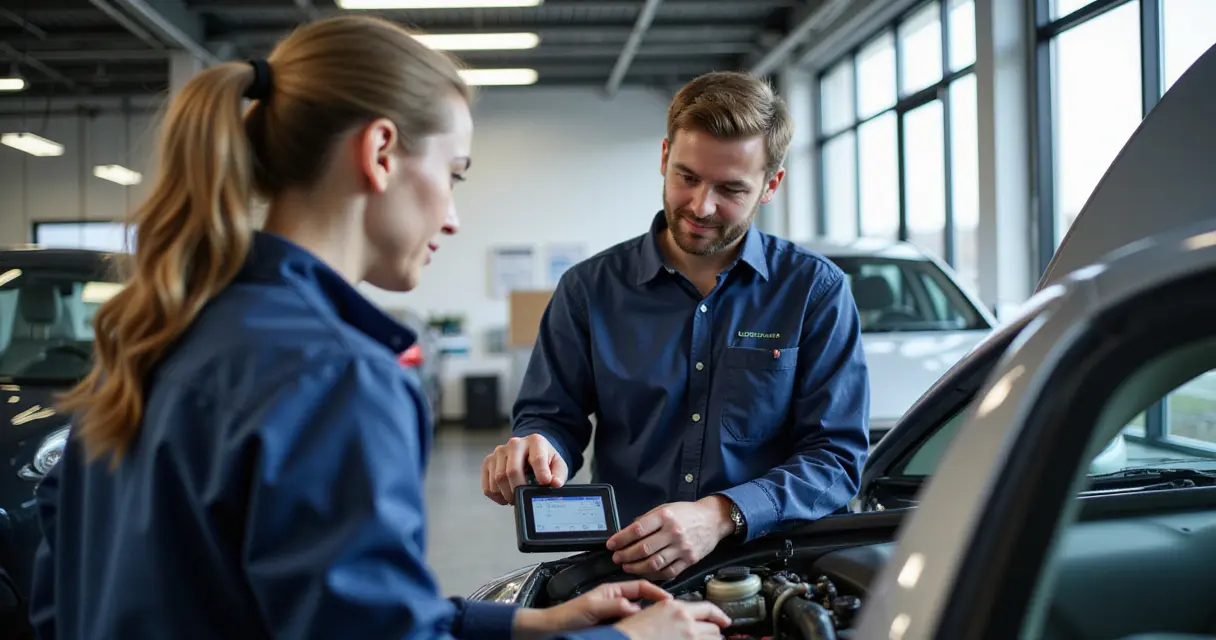
One action for today: open a free fundamentals course and see whether it clicks. Here is a reliable place to start.
Is becoming a plumber actually worth it?
In many cases, yes. You get solid pay and steady demand, and you avoid finishing school buried in student debt.
The U.S. Bureau of Labor Statistics (May 2024) reports that plumbers, pipefitters, and steamfitters had median pay of $62,970 per year, which works out to about $30.27 an hour.
Advertisement
That single number hides a lot. The lowest 10 percent took home under $40,670, while the top 10 percent made more than $105,150 per year.
Earnings at the top usually come from master plumbers, specialists, and people running their own businesses, not from a newcomer with a weekend video course.
Demand looks healthy too. BLS projects about 44,000 openings per year over the decade, roughly 4 percent growth, mostly because older workers retire.
And here is what too many people miss: in an apprenticeship you earn while you learn. Your role is paid employee, not tuition paying student.
The usual pattern is a starting rate set at a percentage of the journeyman wage, followed by scheduled raises as you advance, so your pay climbs every year in the program.
Hold that up against a four year college path, which often costs tens of thousands of dollars while bringing in nothing. The trade clearly comes out on top.
On top of that, the work holds up when other jobs do not. Pipes keep breaking, water heaters keep failing, and new buildings keep going up in any economy.
The honest truth: what a free plumbing course can and cannot do
We want this settled from the beginning. A free online plumbing course is a learning tool. It is not, and never will be, a license.
It can teach you the vocabulary, the tools, how pipe systems are put together, basic plumbing math, and what safe practice looks like on a job. That has real value.
It can provide a completion certificate that shows initiative, a useful detail to mention when you apply for an apprenticeship.
It cannot license you to work as a plumber. In any state that requires a license, no online course, free or paid, is able to do that.
It cannot replace the supervised, on the job hours that licensing boards require. Real work under a qualified plumber is the only thing that counts toward them.
It cannot guarantee you a job. The certificate may help your application stand out a little, but it is not a hiring promise.
If someone insists a free certificate equals a license or a guaranteed job, they are either confused or out to sell you something. Do not forget that.
What plumbing licensing really requires
In most states plumbing is a licensed trade, and although the details differ by location, the path follows a fairly consistent shape.
The foundation is an apprenticeship that typically runs 4 to 5 years, combining paid field work with classroom or online technical instruction.
You log roughly 2,000 paid on the job hours in a year, and most states require about 4,000 to 8,000 supervised hours in total before you can test.
After finishing the hours and the related instruction, you sit for the journeyman exam. A pass makes you a licensed journeyman plumber.
Later on, with more experience, you may pursue a master plumber license, which often lets you pull permits, run a business, and supervise other plumbers.
Throughout, the classroom or online instruction tied to your field hours covers code, theory, and safety, the area where a free fundamentals course gives you a head start.
State variation is real and it matters. Never assume your state's rules match those of the state next door.
What a free plumbing course actually covers
An introductory course will not make you a tradesperson, but a good one teaches the foundation every plumber builds on. Expect topics like these:
- Tools and materials: the hand and power tools of the trade, together with common pipe materials such as copper, PEX, PVC, and cast iron.
- Pipe and drainage systems: how the water supply and the drain, waste, and vent systems function as one inside a building.
- Safety fundamentals: jobsite hazards, personal protective equipment, and why a strong safety culture matters in construction.
- Blueprint reading: how to read plans and plumbing symbols well enough to follow a job from paper to pipe.
- Plumbing math: measurements, slopes, pipe sizing, and the basic calculations the trade uses every single day.
- Codes and standards: an introduction to why plumbing codes were created and how they protect health and safety.
Walk away with this material and you will be a far stronger apprenticeship candidate than someone who shows up cold with no exposure.
Best free and low cost plumbing courses
All of these are reputable places to learn the fundamentals. Each serves a slightly different need, so choose based on your stage in the journey.
| Platform | Cost | Format | Best for |
|---|---|---|---|
| Alison: Introduction to Plumbing | Free, with a free completion certificate | Self paced web course | The best free starting point for total beginners |
| SkillCat | Free basics, about $10 per month for full access | Mobile app with simulations | Hands on practice and OSHA 10 or EPA 608 prep |
| OSHA Outreach (OSHA 10) | Often free through workforce programs | Web based course | A real safety card that employers actually value |
| NCCER | Paid, through partner schools | In person training | A nationally recognized industry credential |
| Udemy | Some free, most paid | On demand video | Niche topics and specific skills |
Notice that OSHA 10 and NCCER, the two items with the most professional weight, are the ones employers recognize. Free certificates are excellent for learning and useless for proving a license.
Can online training replace a real apprenticeship?
No. It is worth being blunt, since so much marketing implies the reverse.
Plumbing is a trade you do with your hands and your body. No video, on its own, will teach you to sweat a joint, set a toilet, or troubleshoot a drain.
The supervised hours are not arbitrary. They protect the public from bad work and develop the muscle memory behind every competent plumber.
Picture a burst pipe behind a finished wall or a botched gas line. Neither is a small mistake, and that is exactly why states demand thousands of hours under a qualified plumber.
Will employers accept a free certificate?
They will read it as a positive signal rather than a qualification, and those two things are very far apart.
On an apprenticeship application, a completion certificate shows initiative and a grasp of the basics, which can set you apart from applicants who did nothing at all.
It will not qualify you to be hired as a working plumber, though. No employer is legally allowed to send you to a job that calls for a license you do not hold.
The credentials employers genuinely care about are an OSHA 10 card, recognized training like NCCER, and, most important, your status in a registered apprenticeship.
Put yourself in the contractor's shoes. They need someone reliable, safe on a jobsite, and on a legal path to a license. A certificate hints at the first of those and nothing more.
So list the free certificate on your application. Just describe it honestly, as foundational learning and not a license.
The real path to a plumbing job, step by step
This is the sequence that actually leads to a licensed, paid career.
- 1. Take a free fundamentals course. Study the basics and make sure you enjoy the work before you invest years in it.
- 2. Earn your OSHA 10 card. It is often available for free, and employers truly respect this credential.
- 3. Check your state licensing board. Confirm the exact apprenticeship, hour, and exam requirements that apply where you live.
- 4. Apply to apprenticeships. Look at union programs (such as the UA), nonunion contractor associations, and local trade schools.
- 5. Work and learn for 4 to 5 years. Collect your paid supervised hours and finish the related technical instruction.
- 6. Pass the journeyman exam. This is the license that lets you work independently as a plumber.
- 7. Consider a master license later. With more experience, it opens the door to running jobs and your own business.
Each step here is real and reachable. Notice, too, that the free course is only step one, not the whole journey.
Red flags to watch out for
"Free plumbing certificate" is a popular search, which is exactly why scammy sites cluster around it. Learn these warning signs and protect your time and money.
- Fake certificate generators. Sites that hand you a printable certificate with no real coursework behind it are worthless and can look dishonest.
- Claims that a course leads to a license. No course grants a license. If they say it does, they are not telling the truth.
- Promises you can "work as a plumber" without an apprenticeship. Where a license is required that is illegal, and following it puts you at real risk.
- "Instant lifetime certificate" mills. They are fine for studying, but understand they carry zero professional weight.
- Pressure and upsells. Aggressive countdown timers and "limited spots" for a basic online course are marketing tricks, not value.
A course you can trust is upfront about what it offers. It teaches real skills and never pretends to be a license.
Your next steps
If plumbing sounds right, there is no need to overthink the first move. Start small, stay honest with yourself, and build momentum from there.
This week, take a free fundamentals course, earn your OSHA 10 card, and check your state's apprenticeship requirements. That is a genuine plan.
After that, the apprenticeship becomes the credential that pays you while you train and leads you to a licensed, durable career. Start with step one below.
Begin with the fundamentals
A free introduction to plumbing with a completion certificate, no cost and no catch.
Frequently asked questions
Is a free online plumbing course really worth it?
Yes, when you use it to learn and to test your interest. It covers the fundamentals and earns you a certificate showing initiative, but it does not give you a license or guarantee a job.
Can online training on its own make me a plumber?
No. Plumbing demands hands on, supervised hours through an apprenticeship. Online training gets you ready for that path but cannot stand in for real world work.
Does finishing a free certificate make me a licensed plumber?
No. A completion certificate shows you finished a course, nothing more. A license only follows meeting your state's apprenticeship hours and passing the journeyman exam.
Do employers take free online plumbing certificates seriously?
They count it as a positive signal on an apprenticeship application, not as a qualification to hire you as a working plumber. Be honest about it.
How many years does it take to become a licensed plumber?
Usually 4 to 5 years in an apprenticeship that combines paid on the job hours with technical instruction, after which you pass the journeyman licensing exam.
How many apprenticeship hours will I need, and does that vary by state?
It varies. You log roughly 2,000 paid hours a year, and most states require about 4,000 to 8,000 supervised hours in total. Your state board has the final word.
Do I need union membership to become a plumber?
No. Union apprenticeships (such as the UA) are one strong path, and nonunion contractor associations and trade schools run recognized apprenticeship programs as well.
What is a plumber's pay, and are apprentices paid?
The median is $62,970 a year (BLS, May 2024), with the top 10 percent above $105,150. And yes, apprentices are paid employees, so they earn while they learn.